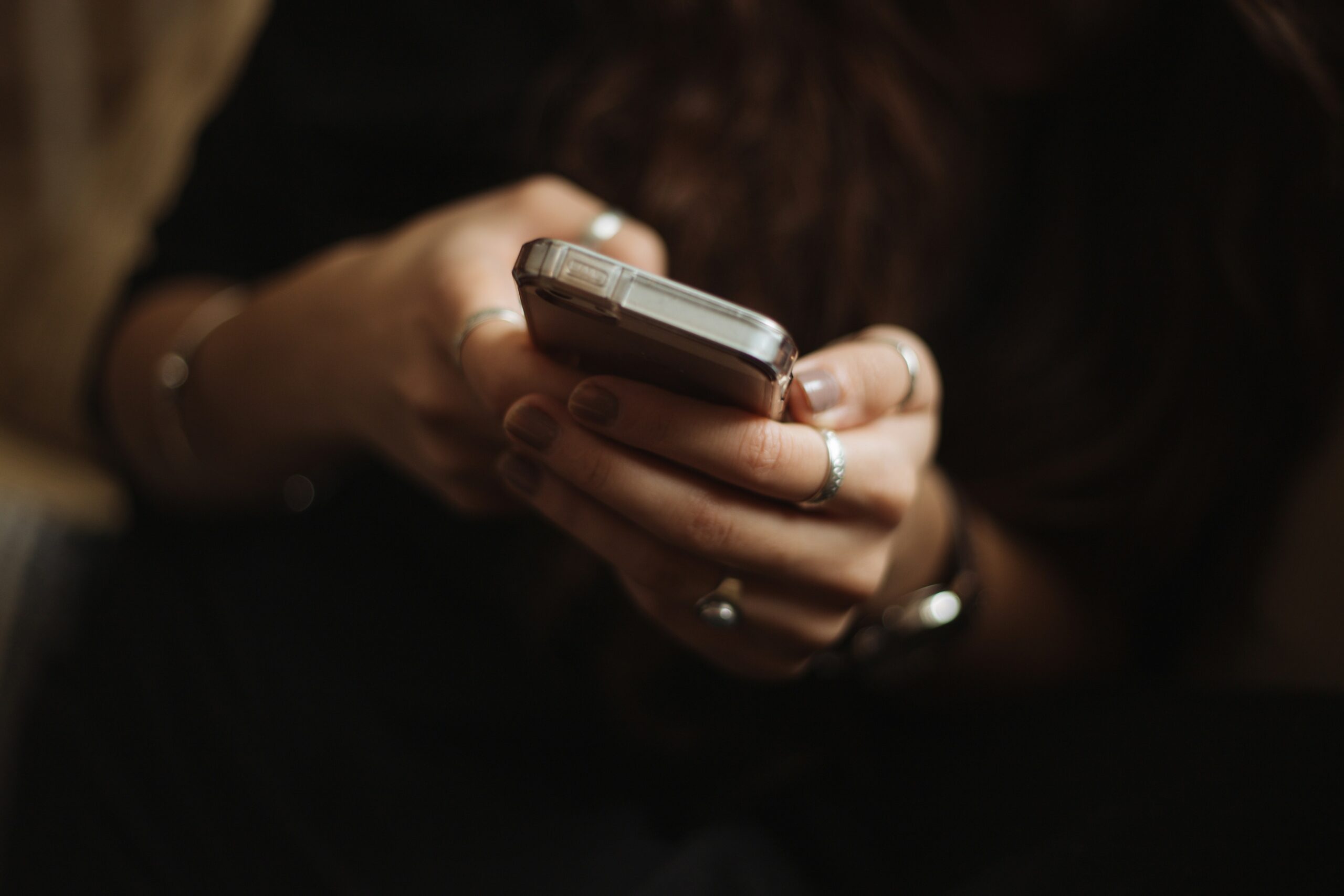
It’s 11:48 p.m. Maya told herself she’d just check on the latest update in the court case she’s following before bed. But now she’s 50 minutes deep into headlines, comment sections, and a video she really wishes she hadn’t watched. Her jaw is clenched. Her heart is racing a little. She’s exhausted, but she can’t seem to put the phone down.
Tomorrow she’ll have a big meeting and she already feels a headache coming on. And yet, tomorrow night she’ll probably do it again.
If Maya sounds familiar, you’re far from alone. Doomscrolling anxiety is one of the most common things people talk about tanking their mental health. Here’s what’s going on, why it’s so hard to stop, and what actually helps.
The people in this post are fictional composites, not real clients. But if you see yourself in them, that’s the point.
What is doomscrolling anxiety?
Doomscrolling anxiety is the worry, dread, and tension that builds when you compulsively scroll through bad news or upsetting content, even though it’s making you feel worse. You keep scrolling to feel more prepared or in control, but instead you end up more anxious, more drained, and less able to focus on your own life.
The first thing to know is that it’s incredibly common. In the American Psychiatric Association’s latest Healthy Minds Poll, nearly half of Americans (49%) said current events make them anxious. (APA)
Why do I doomscroll when it makes me anxious?
You doomscroll because your brain is trying to protect you. When something feels threatening or uncertain, your brain wants more information so it can prepare. The problem is that endless feeds don’t have a clear beginning or end, so your brain never feels “done.” No amount of information ever feels like enough, so you just keep scrolling and consuming, making it easy to become hyper-vigilant.
Meet Derek, 41. After a scary news story broke near his kids’ school, he started checking updates “just to stay on top of it.” A week later, he’s refreshing during dinner, in the carpool line, and at 2 a.m. Each check gives him about 30 seconds of relief. Then the worry comes right back, a little louder.
That’s the doomscrolling loop, and it looks like this:
- Something makes you anxious.
- You check your phone to feel more informed and in control.
- You feel a brief moment of relief (or you find something even scarier).
- The anxiety returns, and so does the urge to check.
Researchers at Texas Tech described this same vicious cycle: some people get drawn further in, checking the news around the clock to ease their distress, but it doesn’t help and starts to interfere with the rest of their lives. (Yahoo/Business Insider summary)
Think of your nervous system like a smoke detector. It’s supposed to go off when there’s a fire. Doomscrolling is like holding a lit match under it all day. Eventually it won’t stop beeping, even when you’re safe on your couch.
And to be clear, this isn’t a willpower problem. Apps are designed to keep you scrolling. You’re up against a feed that never ends, engineered to keep you on it.
How do I know if doomscrolling is hurting my mental health?
Doomscrolling is hurting your mental health when it starts to shape your mood, your sleep, and your day instead of just keeping you informed or entertained. In a Texas Tech study of about 1,100 U.S. adults, 16.5% had news habits that researchers called “severely problematic,” and those people reported more anxiety, stress, and physical symptoms. (Yahoo/Business Insider summary)
Signs to watch for:
- You get absorbed and lose track of time. “Five minutes” turns into an hour.
- You can’t stop thinking about what you read. It follows you into the shower, the car, and bed (I know this happens to me more than I’d like to admit).
- You scroll to calm down, but it has the opposite effect. You check to feel better and end up feeling worse.
- It’s hard to avoid, even when you try. You delete the app and redownload it by lunch.
- It’s getting in the way of your life. Less sleep, less focus at work, less presence with the people in front of you.
- Your body is sounding the alarm. Tight shoulders, a clenched jaw, headaches, or a stomach in knots after scrolling.
- The world starts to feel hopeless. Research has linked doomscrolling to higher existential anxiety, which is that heavy “what’s even the point?” feeling. (Flinders University)
Is it doomscrolling or just staying informed?
The difference isn’t how much news you read; it’s how you feel after you consume it. Researchers have consistently argued the same thing: the problem is the way news is consumed, not simply the amount. (Open Access Government)
| Staying informed | Doomscrolling | |
| Why you open the app | To learn something specific | Out of habit, boredom, dread, or anticipatory fear |
| When you stop | When you have what you need | When your battery dies or you fall asleep |
| Where you read | A few carefully selected trustworthy sources | Endless feeds, comments, and reposts |
| How you feel after | Informed, maybe concerned | Wired, hopeless, or numb |
| What happens next | You take action or move on | You keep checking for the next update |
Caring about the world is a good thing. You don’t have to choose between being informed and being okay. You just need a way of staying informed that doesn’t cost you your sleep and your peace.
How do I stop doomscrolling?
To stop doomscrolling, make scrolling harder, make the news more intentional, and give your nervous system something else to do with the anxious energy. Going cold turkey rarely sticks. Small changes you can keep up work better.
Jess is a 33-year old nurse, who used to fall asleep with her phone on her chest. She didn’t quit the news. Instead, she charged her phone in the kitchen, read a news summary once a day at lunch, and swapped her bedtime scroll for a few pages of a novel. The first week was honestly uncomfortable. By week three, she was sleeping better and noticed she felt less on edge at work. She didn’t have to download a new app or buy a fancy device to lock her out of her phone. It just took a couple intentional tweaks to her routine and a commitment to consistency.
Here’s how to start:
- Pick your news windows. Choose one or two set times a day to check the news, like lunch and early evening. Outside those windows, the news can wait.
- Choose sources, not feeds. A daily newsletter or one trusted outlet has an ending. A social media feed doesn’t.
- Add friction. Move news and social apps off your home screen, log out after each use, or set app time limits in your phone’s settings.
- Keep the bedroom phone-free. Charge your phone in another room and use an old-school alarm clock. This one change helps a lot of people.
- Use a lock-out app or device. Set limits on your use of certain apps or even your phone as a whole. I do this by a Brick to lock my phone. Having to go through an extra step to unlock my phone gives me just enough pause that I can be intentional about my choice to open it or do something that might be better for my mental health.
- Notice the urge before you act on it. When you reach for your phone, pause and ask, “What am I feeling right now?” Often it’s anxiety, loneliness, or boredom, not a need for information.
- Calm your body, not just your mind. Try a slow exhale that’s longer than your inhale, a short walk, or stretching after reading hard news. Your nervous system needs a signal that you’re safe.
- Turn worry into action. This one is key. If something in the news moves you, do one concrete thing: donate, volunteer, call a representative, or check on a neighbor. Then give yourself permission to step back.
- Replace, don’t just remove. Decide in advance what you’ll do instead when the urge to scroll arrives, like a podcast, a book, a puzzle, or texting a friend.
You’ll probably slip back into old habits sometimes. That’s normal. Notice it, skip the guilt, and start again.
When should I see a therapist for doomscrolling anxiety?
It’s time to talk to a therapist if you’ve tried cutting back and can’t, or if the anxiety is spilling into your sleep, work, or relationships. It’s also worth reaching out if the news brings up old fears or past trauma, or if you’re feeling hopeless most days.
Remember Maya? The late-night scrolling wasn’t really about the news. It was about a job she didn’t love, a lonely stretch after moving to a new city, and a deep need to feel in control of something. The phone was just where that anxiety went at night. In therapy, those are the things we’d work on together, so the scrolling has less to soothe.
That’s usually how it goes. Doomscrolling is often a symptom, not the whole story.
Want help getting your evenings (and your peace) back? Book a consultation with Reise Counseling. I work with adults in the Atlanta area and virtually across Georgia.
If you’re in crisis or having thoughts of suicide, call or text 988 to reach the Suicide & Crisis Lifeline, or go to your nearest emergency room.
Frequently asked questions about doomscrolling anxiety
Doomscrolling means continuously scrolling through bad news or upsetting content online, often for longer than you meant to even though it makes you feel worse.
It can make anxiety worse. Research has linked heavy, compulsive news consumption to more anxiety, stress, and existential dread, although people who are already anxious may also be more likely to doomscroll. So, chicken and egg.
Your brain is wired to pay attention to threats, and endless feeds never give you a clear stopping point. Each check can bring you only brief relief, which trains you to keep checking.
For many people, yes. You’re tired, your defenses are down, and blue light exposure, coupled with troubling images can delay sleep, which leaves you more anxious the next day.
It varies. Many people notice a difference in sleep and mood within a few weeks of consistent changes, like keeping the phone out of the bedroom.
Yes. Therapy can help you understand what the scrolling is soothing, build healthier coping tools, and calm your nervous system so the urge to check has less pull.

Hi, I’m Christina Wolverton, better known as ‘Nina’ and I’m a licensed professional counselor, somatic therapist and the director of Reise Counseling in Atlanta, Georgia. I started this counseling practice to provide holistic and integrative mental health support to those experiencing trauma, loss, change, chronic stress and pain.
I am constantly looking for ways to challenge myself, either physically, emotionally, or intellectually and I try to keep informed on new research and emerging evidence that can benefit my clients. Here, you’ll find resources related to mental health, self care practices, nervous system regulation and the ways that different therapies may benefit you. Welcome!
October 7, 2026