If you’ve landed on this page, you’re probably googling some version of “is neurofeedback really safe?” at 11pm, half hopeful and half skeptical. That’s a normal place to be. Anything that involves the words “brain” and “electrical” together deserves a little healthy suspicion.
So let’s talk about it. Plainly, without the jargon.
First, let’s clarify that for the purposes of this article, we’re talking about a specific and modern version of neurofeedback called Micro Current Neurofeedback or MCN. It’s slightly different from former versions of neurofeedback and gives improved results so you might want to check with any potential provider on exactly what kind of neurofeedback they practice.
The short answer to “Is neurofeedback really safe?”
Yes, neurofeedback is considered safe. It’s non-invasive, drug-free, and doesn’t involve anything entering your body. No needles, no medication, no radiation. You sit, you relax, and your brain gets a little nudge in a healthier direction.
But “is it safe” is really shorthand for a bunch of smaller questions. Let’s get into those.
Are there side effects from neurofeedback?
Most people feel nothing unusual at all. Some feel pleasantly relaxed, almost like they just left a good yoga session. A smaller number feel a little tired afterward, kind of like your brain was up late studying.
That tired feeling, if it happens, usually fades within a day or two. It’s not a sign that something went wrong. It’s often a sign your brain is actually responding to the training.
Occasionally people notice a mild headache or a change in sleep for a night. Again, this is short-lived. It’s not the kind of side effect list you’d see on a prescription bottle. There’s no long list of warnings, no bruising, pain or other damage, nothing scary lurking in fine print.
What does neurofeedback actually feel like?
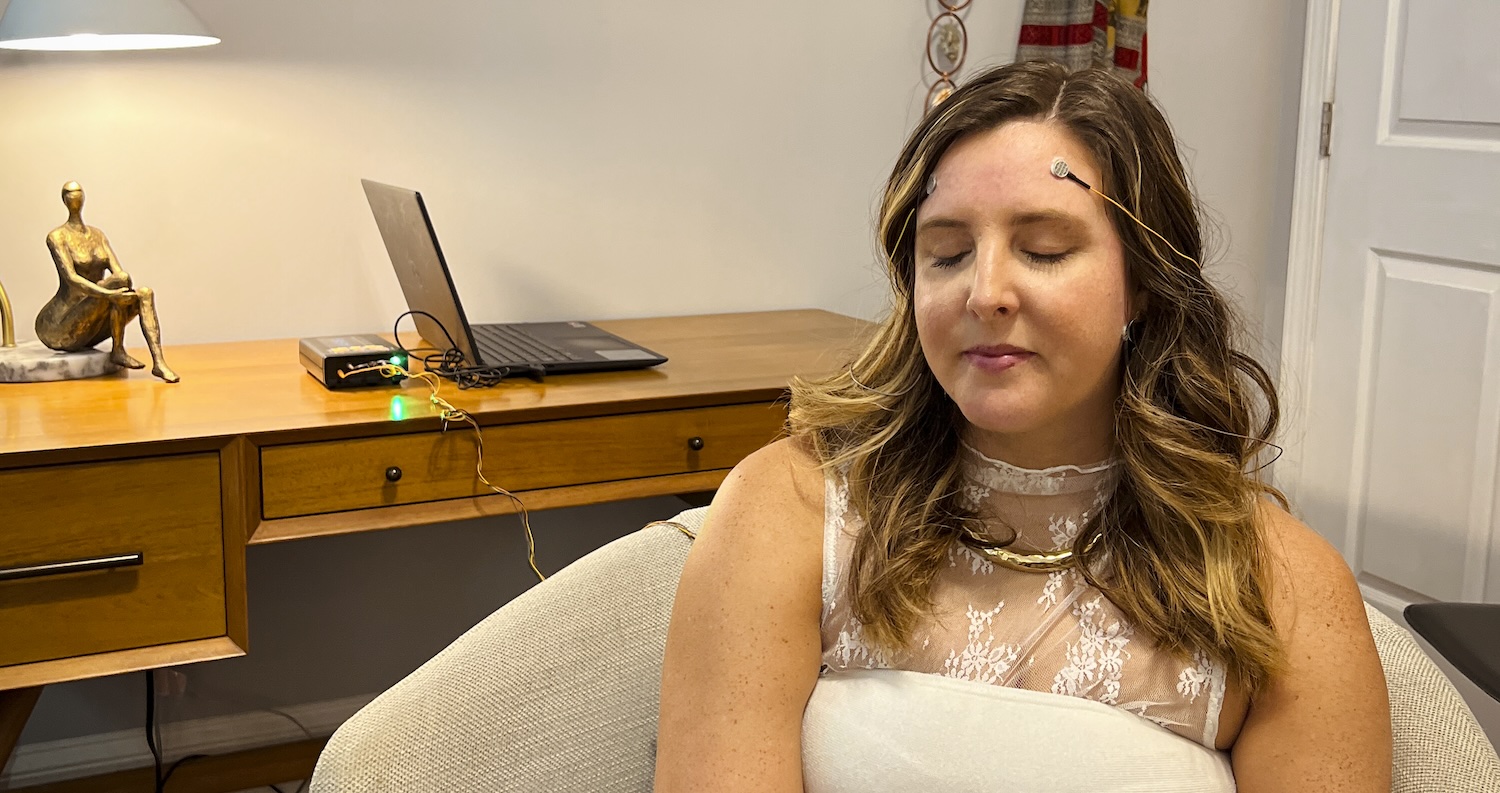
Honestly? Kind of boring, in a good way. You sit in a comfortable chair. Small sensors get placed on your scalp, but they don’t send any noticeable jolt or shock. Most people describe the sensation as nothing at all, or maybe a faint tingle.
While the sensors quietly do their thing, you might watch a calming video, close your eyes, or just zone out for half an hour. A lot of clients say it feels like a guided nap. You’re not gritting your teeth through anything. You’re not white-knuckling an appointment. It’s closer to meditation than medicine.
How fast will I feel a difference?
This is where people get pleasantly surprised. Unlike a lot of mental health tools that take weeks to show results, neurofeedback often works fast. Many people notice something shift after their very first three sessions. Calmer mood, easier sleep, less mental fog. It’s not universal, and everyone’s brain responds a little differently, but early changes are common.
That said, quick doesn’t mean it’s a one-and-done fix. The real, lasting results tend to build over a series of sessions, often somewhere between 12 and 20, depending on what you’re working on. Think of the first session as a preview and the following ones as the main event.
Can neurofeedback interact with my medication or other treatments?
This is one of the most common questions we get, and it’s a good one. The reassuring answer is that neurofeedback plays well with others. You don’t need to stop any medications to start. It’s not a chemical process, so there’s nothing to interact with.
Some people find that over time, as their brain regulates itself more naturally, they and their prescribing doctor decide together to adjust medication. But that’s a conversation between you and your physician, on your timeline, never something we push or promise. Neurofeedback can also sit comfortably alongside traditional talk therapy, EMDR, or whatever else is already part of your care.
Why hasn’t my doctor or therapist mentioned this before?
Here’s the honest truth: as of 2026, there are only seven practitioners in the state of Georgia offering this exact form of microcurrent neurofeedback. Seven. In a state with millions of people.
That means most doctors and even most therapists simply haven’t crossed paths with it yet. It’s not part of standard medical or therapeutic training, and it’s not something you’ll find in a textbook your provider studied in grad school. It’s less a secret and more a matter of visibility. This tool is still relatively new and word is only starting to spread.
So if your doctor looks a little puzzled when you bring it up, that’s not a red flag. It just means you found something before they did.
So, is it really safe?
Yes. It’s gentle, it’s well tolerated and the worst most people report is a little sleepiness or irritability. It doesn’t require you to pause your medication, doesn’t involve any invasive procedure, and doesn’t ask you to just push through discomfort and hope for the best.
If you’re curious whether it could help with what you’re carrying right now, whether that’s anxiety, a foggy mind, or trouble sleeping, we’d love to talk it through with you. No pressure, no sales pitch. Just an honest conversation about whether this might be a good next step.
Reise Counseling is a partner on your path. Reach out anytime to ask questions or get started if you’re in the Atlanta area.
Hi, I’m Christina Wolverton, better known as ‘Nina’ and I’m a licensed professional counselor, somatic therapist and the director of Reise Counseling in Atlanta, Georgia. I started this counseling practice to provide holistic and integrative mental health support to those experiencing trauma, loss, change, chronic stress and pain.
I am constantly looking for ways to challenge myself, either physically, emotionally, or intellectually and I try to keep informed on new research and emerging evidence that can benefit my clients. Here, you’ll find resources related to mental health, self care practices, nervous system regulation and the ways that different therapies may benefit you. Welcome!
September 8, 2026