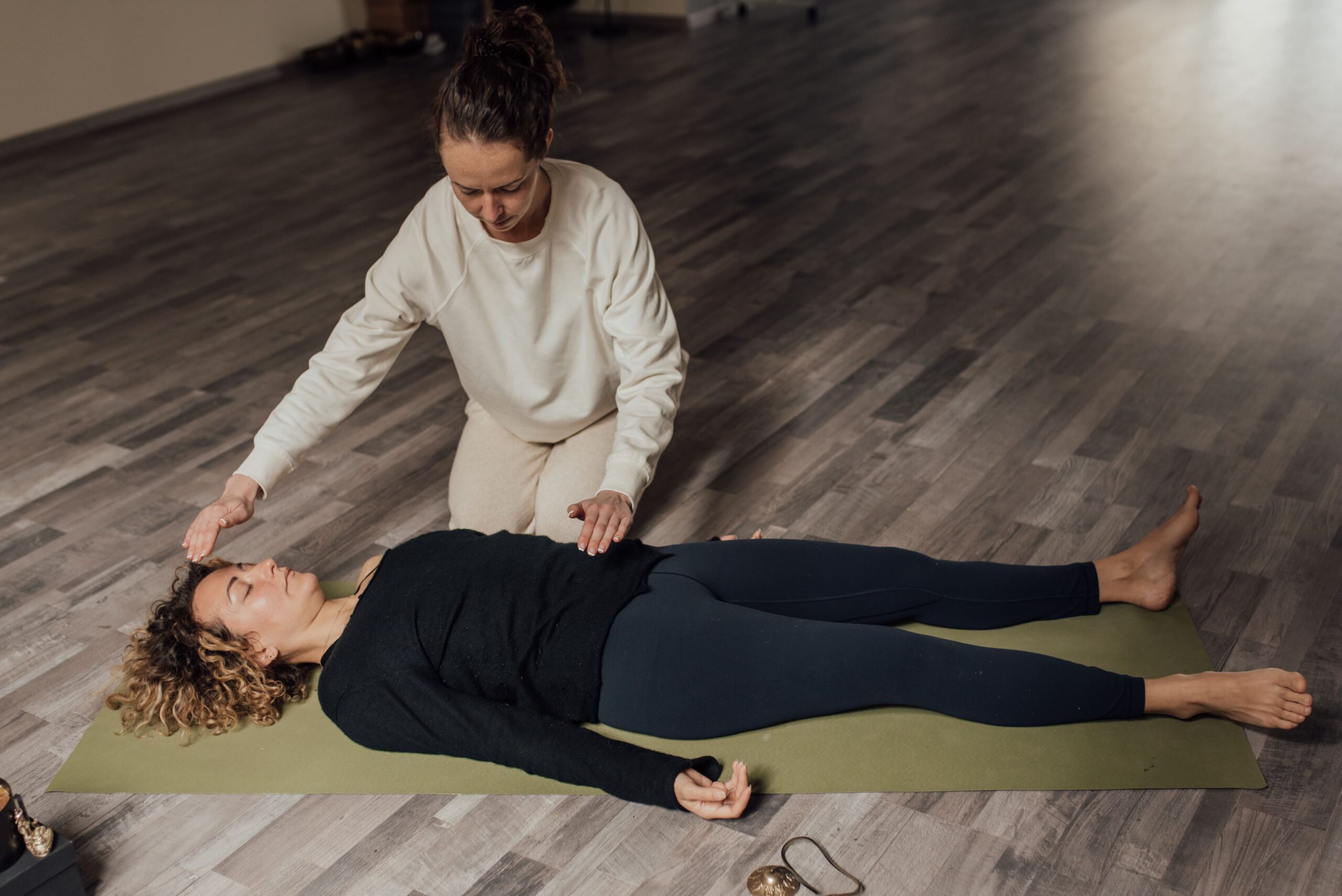
If you’ve tried breathwork once, felt underwhelmed, and quietly filed it under “not for me,” you’re not alone. It’s one of the most common things I hear. And almost every time, the story is the same: someone tried one technique, one time, usually in the middle of an already stressful moment, and expected it to release all this trauma. But there are different types of breathwork—the most common being for deescalation.
That’s not what I teach.
Not because the other type of breathwork is useless. But you have to know what your goal is in order to practice the kind of breathwork that’s going to give you the results you’re looking for.
Let’s rewind and talk about why breathwork may not have “worked” for you in the past, how you should be practicing, and why doing this with a trained guide matters more than most people realize.
First, not all breathwork is equal
A lot of people think of breathing techniques that help calm you during an anxiety attack when they think of breathwork. Like box breathing… the four-count in, hold, out, hold pattern you’ve probably seen on a wellness app. That’s just one type of breathwork and while it’s extremely effective, it’s not typically going to provide a huge release. It’s meant to deescalate and ground you during intense stress or overwhelm.
While I teach these types of stress relieving techniques in individual therapy, breathwork sessions are much more complex and intense.
Simple techniques like box breathing are designed to calm you down in the moment. They’re safe to do alone, any time, no supervision needed. Breathwork, especially the more active styles that involve deep belly paced or rhythmic breathing patterns, is doing something different. It’s designed to release stored energy in the form of stress or trauma and can bring up real emotional or physical responses along the way.
Treating breathwork like a slightly fancier version of box breathing is part of why it can feel like it “didn’t work.”
It’s not necessarily going to rewire your nervous system permanently after one session, though. That kind of change typically takes consistent practice.
Your nervous system built its current patterns over years. It’s not going to unlearn them in sixty minutes.
But you could walk away unburdened, breathing deeper, with your shoulders lowered and a weight off your chest. Doesn’t that sound nice?
Why guided sessions matter more than people think
It’s tempting to assume you can just watch a video and recreate the experience at home. For gentle techniques, that’s often fine. For more active breathwork, it’s a different story.
More intense styles can genuinely shift the balance of oxygen and carbon dioxide in your body for a short time. In a healthy person, guided by someone trained to watch for it, this is well tolerated. Without that guidance, people sometimes push further than their body is ready for, misread what they’re feeling, or don’t know how to come back down safely if something intense surfaces.
A trained practitioner isn’t just there to lead the breathing pattern. They’re watching your reactions, adjusting pace, and helping you process whatever comes up, whether that’s a wave of emotion or just plain restlessness. That support is a huge part of why the practice works long term. It’s also why what feels like nothing happening in a solo session can feel completely different when you’re guided through it under someone’s care, ideally a licensed counselor or practitioner.
What this means for you
If breathwork didn’t do much for you the first time, that’s not proof it doesn’t work. It might just mean you tried the wrong setting or the wrong technique for what your body actually needs.
Real results come from working with someone who can guide you safely through the techniques that target the results you’re looking for and support you in the release and processing.
If you’re curious what guided breathwork could do for you, I’m here to talk it through.

Hi, I’m Christina Wolverton, better known as ‘Nina’ and I’m a licensed professional counselor, somatic therapist and the director of Reise Counseling in Atlanta, Georgia. I started this counseling practice to provide holistic and integrative mental health support to those experiencing trauma, loss, change, chronic stress and pain.
I am constantly looking for ways to challenge myself, either physically, emotionally, or intellectually and I try to keep informed on new research and emerging evidence that can benefit my clients. Here, you’ll find resources related to mental health, self care practices, nervous system regulation and the ways that different therapies may benefit you. Welcome!
September 22, 2026