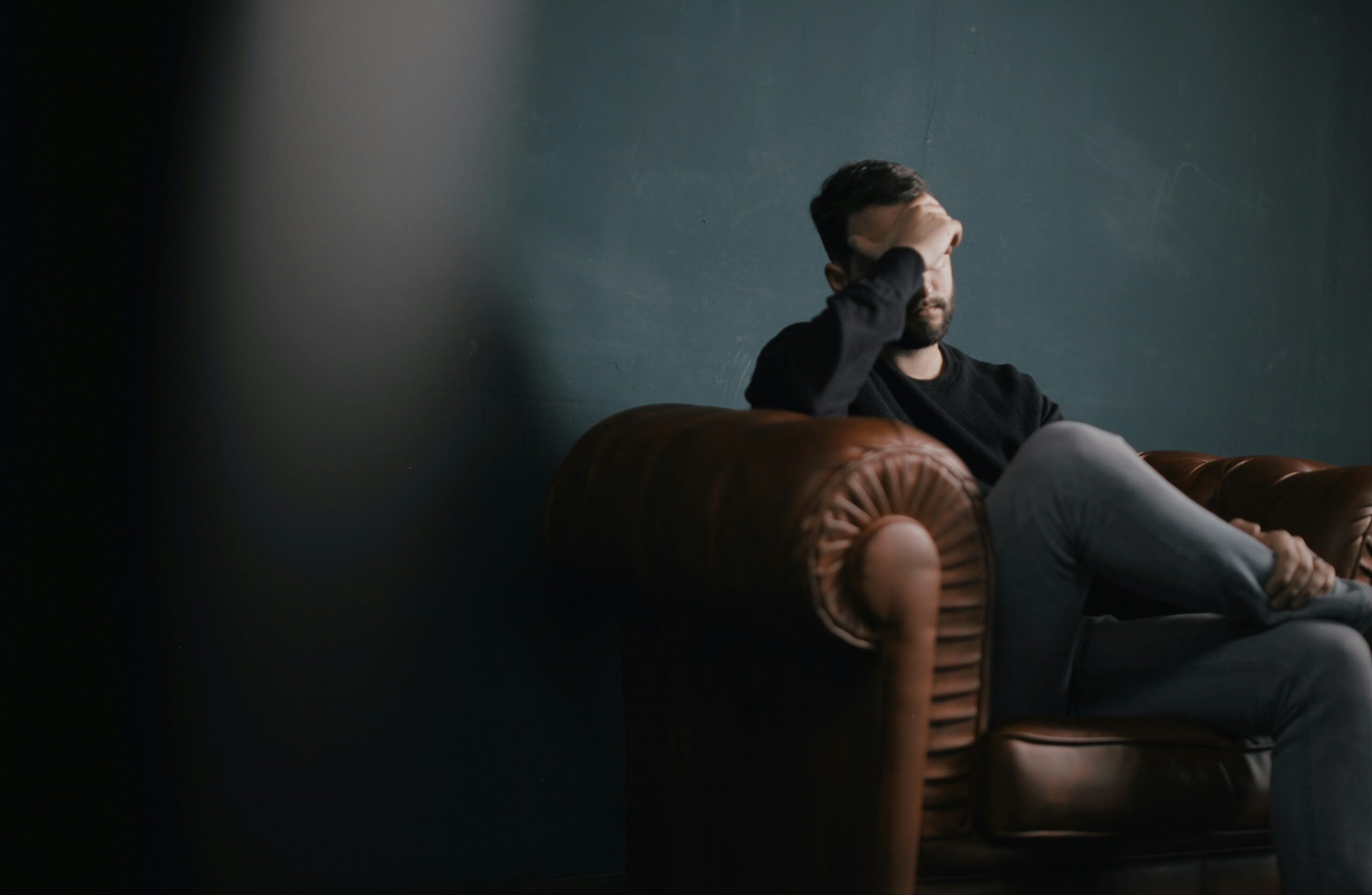
It’s 5:45 p.m., it’s already getting dark, and your couch is making a very persuasive case for itself. Again.
A little dip in energy when the days get shorter is normal. But if fall and winter leave you feeling flat, heavy, or unlike yourself year after year, you may be dealing with more than the winter blues. Here are the signs of seasonal depression, how to tell the difference, and what actually helps.
In my own life, this has looked like difficulties getting myself to workout or spend time with friends. It’s meant putting on pajamas as soon as I get home and coming up with excuses to get in the bed earlier. It’s saying I just want to be “cozy” instead of acknowledging the fact that doing most things feels pretty hard. Maybe you can relate?
What is seasonal depression?
Seasonal depression, also called seasonal affective disorder (SAD), is a type of depression that follows a seasonal pattern. For most people, symptoms start in late fall or early winter and lift in spring, lasting about four to five months a year. It’s different from the winter blues because it affects how you feel, think, and function day to day, not just your mood on a gray afternoon. (NIMH)
What are the signs of seasonal depression?
The most common signs of seasonal depression are a low mood that sticks around most days, oversleeping, craving carbs, pulling away from people, and losing interest in things you usually enjoy. You don’t need every sign on this list. What matters is the pattern: these show up around the same time each year and get in the way of your life.
- You’re sleeping more and still waking up tired. Nine hours, ten hours, and you still hit snooze like it owes you money.
- You’re craving carbs and comfort food. Bread, pasta, sweets. Many people with winter-pattern SAD notice their appetite and weight creep up.
- You want to hibernate. Canceling plans feels like relief, not disappointment. Texts sit unanswered.
- The things you usually love now feel like chores. Yoga, reading, the show you were excited about. It’s not that you don’t have time; you just don’t care the way you used to.
- Your mood is low most of the day, most days. Sad, anxious, or just “empty,” for two weeks or longer.
- Your focus is foggy. Emails take twice as long. Small decisions feel big.
- You’re irritable or hard on yourself. Guilt, frustration, or feeling worthless shows up more than usual.
- Your body hurts for no clear reason. Headaches, aches, or stomach trouble that don’t have a physical explanation.
- It happens around the same time every year. This is the big one. If you can predict your slump on a calendar, there is definitely a seasonal onset at play.
If you’re having thoughts of death or suicide, please don’t wait it out. Call or text 988 to reach the Suicide & Crisis Lifeline, any time of year.
(Less common: some people experience the opposite pattern, called summer-pattern SAD, with insomnia, poor appetite, restlessness, and anxiety in the warmer months.)
Winter blues vs. seasonal depression: what’s the difference?
The difference comes down to how much it interferes with your life. With the winter blues, you feel a little down but still show up for yourself and the people you love. With seasonal depression, it becomes hard to function, and it lasts for weeks rather than days.
| Winter blues | Seasonal depression (SAD) | |
| How long it lasts | A few days here and there | Two weeks or more, often for months |
| Daily life | You still get things done | Work, relationships, or self-care start to slip |
| Energy | A bit sluggish | Exhausted even after lots of sleep |
| Social life | Prefer cozy nights in | Withdrawing from people you care about |
| Pattern | Comes and goes | Returns around the same time most years |
It’s also not the same as the holiday blues. Stress from family visits, travel, or year-end deadlines is real, but SAD is actually tied to daylight, not the calendar. You can absolutely have both, which is a fun combination nobody asked for. (NIMH)
Can you get seasonal depression in Atlanta?
Yes. Seasonal depression is less common in the South than up North, but living in Georgia doesn’t make you immune. Older research estimated SAD rates ranged from about 1.4% in Florida to 9.7% in New Hampshire, and researchers also noted that the amount of light that triggers symptoms varies from person to person. Someone might be fine in Florida but struggle in Maryland. (Psychiatric Times)
Here in Atlanta, we get milder winters, but we still lose a lot of light. Once daylight saving time ends on November 1, it’s dark before most of us leave work. Add gray, rainy weeks and long days under office lighting, and your body notices, even if your brain tells you “it’s not that cold.”
So if you’ve been brushing off your winter slump because “I don’t even live somewhere with real winter,” this is your permission to take it seriously.
Who is most at risk for seasonal depression?
Seasonal depression most often starts in young adulthood and is much more common in women than men. You may also be more likely to experience it if:
- You already live with depression or bipolar disorder, especially bipolar II
- You have ADHD, an anxiety or panic disorder, or an eating disorder
- Depression or other mental health conditions run in your family
- You live farther from the equator, where winter days are shorter
(NIMH)
I’d add one group that doesn’t show up in the research lists: high achievers. When you’re used to running on drive and discipline, a seasonal dip often gets labeled as laziness instead of what it is. If your inner critic gets louder every November, that’s worth noticing.
What helps with seasonal depression?
Seasonal depression is very treatable. The four main treatments are light therapy, talk therapy, antidepressant medication, and vitamin D, used alone or together. (NIMH)
Light therapy. This usually means sitting near a 10,000-lux light box for about 30 to 45 minutes each morning, from fall through spring. Check with your doctor first if you have an eye condition or take medication that makes you sensitive to light.
Talk therapy. A version of cognitive behavioral therapy adapted for SAD has worked as well as light therapy in research, and its benefits seemed to last longer over time. A big part of it is behavioral activation: deliberately scheduling things that bring you some pleasure or meaning, even when you don’t feel like it. Especially when you don’t feel like it.
Medication. Antidepressants can help, either alone or alongside therapy. That’s a conversation to have with your doctor or psychiatrist.
Vitamin D. Many people with winter-pattern SAD are low in vitamin D, though research on supplements is mixed. Ask your doctor to check your levels before you start.
Small things you can start this week
- Get outside within an hour or two of waking, even for 10 minutes. Coffee on the porch counts.
- Keep your sleep and wake times steady, weekends included.
- Put one enjoyable thing on your calendar each week and treat it like an appointment.
- Move your body in a way you actually like. Yoga, a walk around the neighborhood, a dance break in the kitchen.
- Tell one person you trust how you’ve been feeling.
If you know this happens to you every year, don’t wait for the slump to show up. Starting support in early fall can help prevent or soften it.
When should you talk to a therapist about seasonal depression?
Reach out if your symptoms have lasted more than two weeks, if they’re affecting your work or relationships, or if the self-care basics aren’t making a dent. You also don’t need to hit rock bottom to deserve support. “I feel like this every winter and I’m tired of it” is a perfectly good reason to book a session.
In our work together, we’d look at your seasonal pattern, what tends to trigger it, and what’s helped (or hasn’t) in past years. Then we’d build a plan for the darker months that fits your life, not a generic checklist.
Ready to get ahead of this winter? Book a free consultation with Reise Counseling. I see clients in the Atlanta area and virtually across Georgia.
If you’re in crisis or having thoughts of suicide, call or text 988 or go to your nearest emergency room.
Frequently asked questions about seasonal depression
For most people, symptoms begin in late fall or early winter and ease up in spring. Some people notice early signs as soon as September or October, when the days start getting noticeably shorter.
Symptoms typically last about four to five months each year.
Symptoms typically last about four to five months each year.
Yes. Seasonal affective disorder is a recognized type of depression. It’s generally diagnosed when depressive episodes happen during the same season for at least two years in a row.
Yes, though it’s less common. Summer-pattern SAD tends to bring insomnia, poor appetite, restlessness, and anxiety rather than oversleeping and carb cravings.
Yes. Research on a form of cognitive behavioral therapy adapted for SAD found it worked as well as light therapy, with benefits that seemed to last longer.
If you know you’re prone to it, starting treatment or coping strategies before symptoms show up in the fall may help prevent or reduce them.

Hi, I’m Christina Wolverton, better known as ‘Nina’ and I’m a licensed professional counselor, somatic therapist and the director of Reise Counseling in Atlanta, Georgia. I started this counseling practice to provide holistic and integrative mental health support to those experiencing trauma, loss, change, chronic stress and pain.
I am constantly looking for ways to challenge myself, either physically, emotionally, or intellectually and I try to keep informed on new research and emerging evidence that can benefit my clients. Here, you’ll find resources related to mental health, self care practices, nervous system regulation and the ways that different therapies may benefit you. Welcome!
October 21, 2026